The next step is to understand current informational demand: what content in your domain ranks high on search engines. This verifies the topical clusters from Step 1.1 and ensures you also include the clusters search engines consider important for the query or domain.
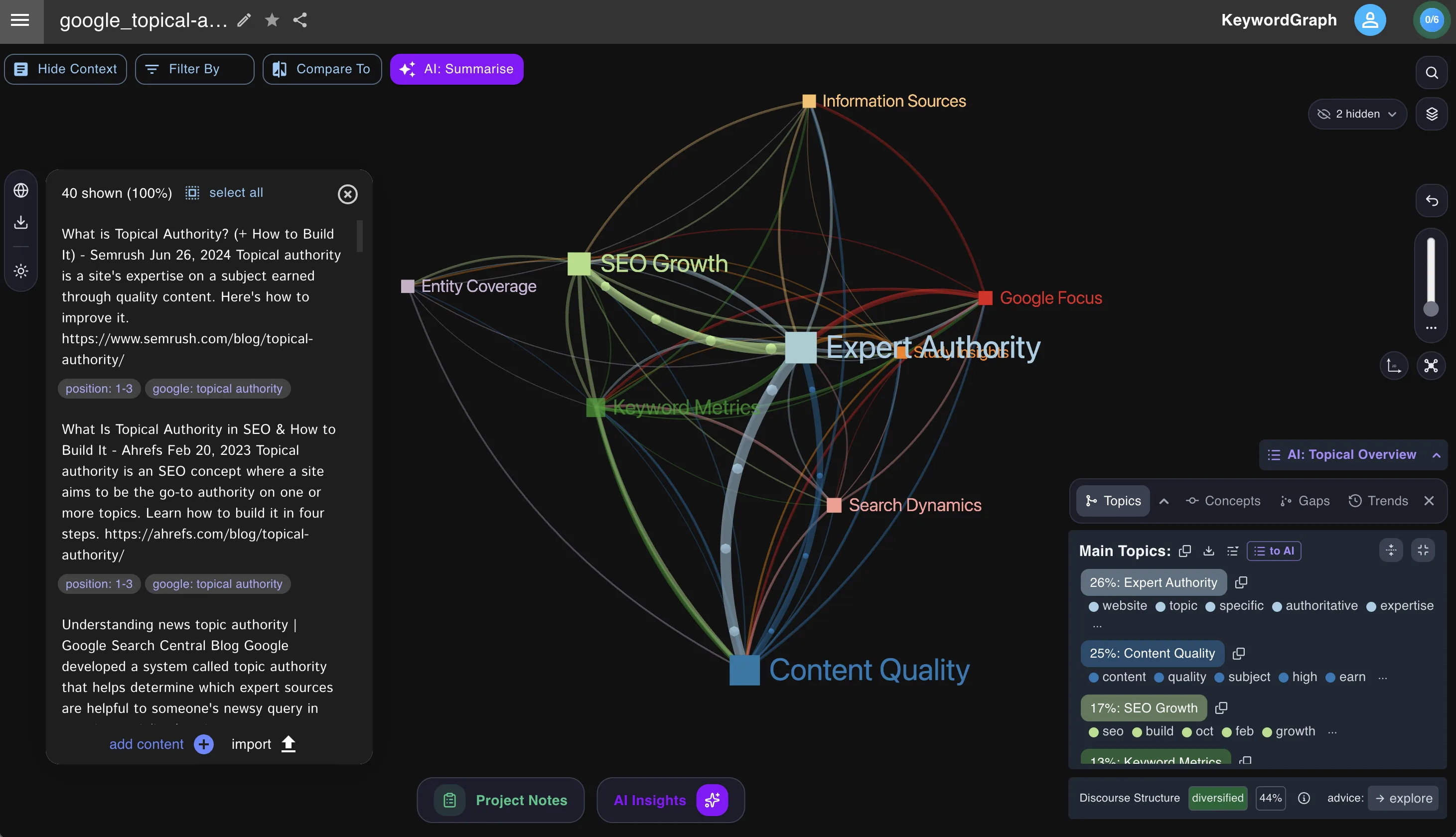
Here it usually makes sense to run the analysis on keywords, not entities, to give the model richer context for extracting clusters. Use the Google search results analysis tool to get the graph:
A graph of what ranks on Google for 'topical authority' — the content search engines currently reward.
As in Step 1.1, save these clusters and generate AI summaries into your Project Notes. Comparing to the LLM output, three clusters stand out:
Content Quality
Entity Coverage
Information Sources
These clusters do not really exist in the first LLM graph, so they may be particularly important for Google to assume a page or site has authority on the subject. You can click each topic to study the actual search results in more detail, or ask the MCP server to add the statements to your context.